Showing posts with label Global Collaboration. Show all posts

Monday, April 21, 2025

Veative - Virtual Reality

 Education is constantly expanding due to the incredible benefits of technology. Virtual reality use in classrooms is becoming more popular due to its ability to create interactive and immersive learning experiences. Virtual reality enhances student learning, understanding, and retention. VR can be used in classrooms to simulate real-world scenarios, like science experiments, field trips, or just exploring the world. This provides students with opportunities to learn in ways that are not possible to do in traditional classrooms. 


One virtual reality company I had researched was Veative. Veative provides immersive learning solutions using virtual reality technology for schools and educational programs. Their VR programs come with easy-to-use online classroom and content management systems. With the systems, teachers can view module content for lesson planning, provide VR content modules at the same time and on all students headsets. Teachers can pause or stop the module at any time and monitor in real time what students are seeing. 


Veative’s virtual reality learning experience comprises t
he world’s largest library of curriculum-aligned AR/VR modules for STEM, ELL, and virtual tours. The immersive knowledge resources offered include, K-12 STEM, history and culture, language learning, and higher education. 


Virtual reality programs like the ones provided by Veative, fully immerses students by completely focusing and learning topics. When experiencing lessons in this way, students are able to create clear and detailed mental visions, helping to improve knowledge retention. 


 Augmented and Virtual Reality: Their Role in a Classroom

As technology advances it opens up door for all no matter what profession or way of life a person lives, technology fits into almost everyone's day to day life. As educators we get to work hand in hand with technology as it helps us instruct our students and make our teaching practices more engaging and inclusive to all learners. A great tool to be utilized in the classroom today is VR and augmented reality. 

Augmented reality, provides students with interactive and meaningful learning experiences  while staying in their learning environment. While VR, creates an entire digital environment, a 360-degree, immersive user experience that feels real. Both of these tools can give students access to different content areas and help support their learning in a more hands on immersive type way. For augmented reality, students can complete different labs like dissecting frogs or starfish or even have them mix different chemicals and make different elements. Not only can it be useful for science but social studies as well! It can be used for global collaborations, such as allowing for students to experience different cultures all over the world! Students can use VR to make it feel like they are in a different parts of the world, interacting and connecting with people who reside across the world! VR can give students the opportunity to learn from and with all different types of students, not only their cultures but their own learning discoveries and topics that are discussed where they live. 

Augmented reality and Virtual Reality open up a lens to interact with all different types of things and people in a unique close-to-authentic way. It can allow for a space (especially VR) where people all over can come to a space to interact and work with one another like they were in the same room. It can bring the brightest minds together to work on projects and help further society in unity with those all over! As time progresses and this technology becomes easily available it is important to utilize it in a way to teach students and allow for student to connect and collaborate globally. 

Source: https://soeonline.american.edu/blog/benefits-of-virtual-reality-in-education/


Nearpod And Global Collaboration

Nearpod is an interactive tool that is used in the classroom that allows teachers to create and share presentations, quizzes, polls and even videos. 

    Nearpod is aimed at making the classroom a more interactive place for students and allowing lessons to be teacher-led, student-paced, or even in front of the class. 

    Not only is Nearpod a great use for teacher use, it also allows the students to interact with students virtually all over different parts of the country and other countries. 

    Global collaboration is being introduced more and more in classrooms everyday with the help of programs like Nearpod. Nearpod also has the ability to let students tour different areas around the world without having to physically visit the locations. Students are able to create relationships and learn about different parts of the country virtually. 

    Creating interactive lessons in the classroom is such a game changer. I have always enjoyed hands on lessons more than just reading or listening to someone speak about a topic. I have also witnessed first hand how much more engaged other students have been when partaking in an activity and being able to navigate things on their own. Nearpod seems like such a cool and inclusive tool that I would definitely use in my classroom! 

Nearpod: Global Collaboration opportunities

Nearpod is a digital lesson library. There are countless lessons and available activities on this site. You may ask yourself, why does that matter even in the slightest? Well.. By having such a large selection of resources, Nearpod has boundless opportunities via countless means. Many of those opportunities can contribute to global collaboration, as there are lessons from across the world available on Nearpod by which classrooms can gain a global consciousness. There are also many lessons with VR or AR capabilities where students can utilize modern technologies. 

As a global tool, Nearpod is used all over the world. Because of this, the opportunities are vast for, say, classrooms in America to be granted exposure to classrooms all over the world. Not just the students, but educators as well can benefit from the global presence that Nearpod has access to. Educators in 160+ countries use Nearpod. For educators, exposure to educators from all over the globe can lead to inspiration and the ability to craft new lessons for their classrooms!

Returning to the ideas of global collaboration...
Through Nearpod, classrooms in non-affected areas can learn about issues in affected areas. That probably sounds vague and makes no sense, so here is an example: The conflict in Kashmir is not happening in the United States, and thus, may go relatively unknown to students. Nearpod has lessons on this conflict however, and from this, students can gain an understanding of global events. Through their understanding, students, working on goals projects or any project in general, can address the issues, working alongside their peers and potentially governments to try and make a powerful statement on topics all over the world. 
Students can work together, with their classmates on projects, but that isn't all that much GLOBAL collaboration is it? Nearpod has collaboration activities, where students can collaborate, similar to a padlet or a jamboard. This next part is solely on the educators to make possible. Collaboration is possible across borders, continents, and oceans. The only prerequisite is that educators from across the world will have to connect first. Should they connect, they can bring their classrooms together and have their students work alongside each other, despite any distance between them! Through this collaboration, issues such as the Kashmir conflict can be discussed by students of many nations(if their teachers connect first that is!). Should there be a connection between classrooms, those global goals projects I mentioned earlier can be worked on by students who simultaneously on opposite sides of the planet! Those projects would be so interesting, as the collaboration between different nations students could yield great results. 


Sunday, April 20, 2025

Using Nearpod in Classrooms for Global Collaboration

In today's society, global collaboration is no longer optional, but necessary. Students are growing up in a globally connected society, and equipping them with tools to collaborate, and problem solve with others around the world is essential. One of the tools that help make this possible is virtual reality, and Nearpod stands out as an accessible way to bring immersive, international experiences into classrooms.

What is Nearpod?

Nearpod is an learning platform that allows educators to deliver engaging interactive lessons using assessments, multimedia content, and collaborative tools. Its virtual reality feature lets students take 360 degree virtual field trips to global landmarks, cultural heritage sites, and natural wonders of the world, all from the comfort of the classroom.

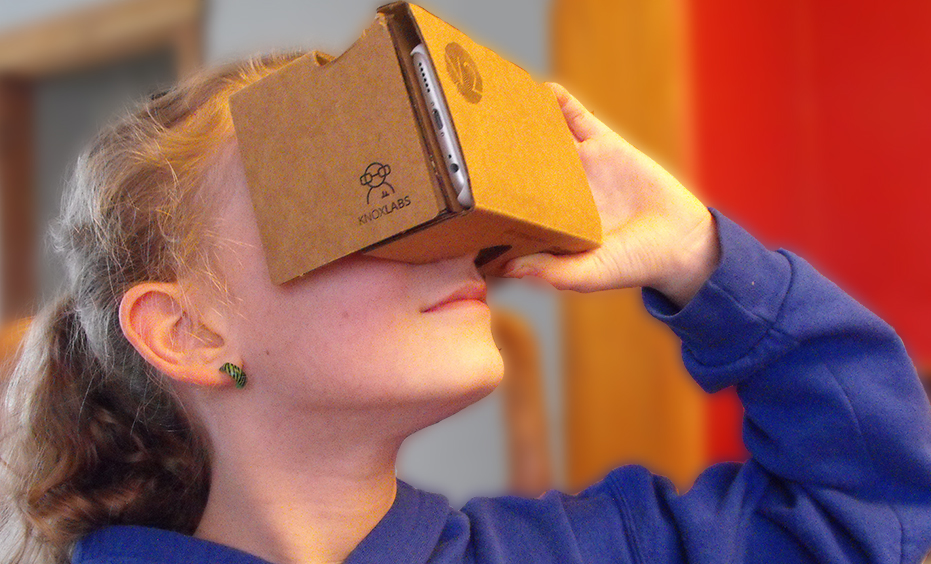
One of the benefits of Nearpod is that unlike other virtual reality tools it is not necessary to use expensive equipment. Nearpod is compatible with inexpensive viewers like Google Cardboard and can also be used on regular tablets and Chromebooks which makes it highly accessible for classrooms around the world regardless of budget constraints.

Supporting Global Collaboration

Nearpod goes beyond just sightseeing, it lays down the groundwork for meaningful cross cultural communication and project based collaboration. Students on opposite sides of the world can take a virtual tour of the same historic place together. After exploring, they can collaborate and ask questions that would be unique to their culture which can help build a greater global understanding. Students can also visit important environmental places that are in danger like the Amazon Rainforest or the melting glaciers in the arctic, then partner with peers in other countries to brainstorm climate action plans. This fosters empathy, critical thinking, and problem solving in the real world. Nearpod can also enable students to explore everyday life in other countries, visiting towns, homes, and schools in different regions. These experiences can become conversation starters in global writing programs or cultural exchanges. 

Nearpod Lesson Plans 

Educators can incorporate Nearpod into their classrooms through lesson plans such as this one. In this lesson students can explore the grand canyon and learn about it through a virtual tour and in an interactive environment. After the virtual tour students can make a poster sharing what they learned from the experience.

Nearpod can be used in many creative ways to help build a deeper understanding of global connections and can create a dialogue between different cultures through its use in the classroom.

Sunday, April 13, 2025

WE Virtual Learning Center: The Future Of My Classroom

     All throughout the semester, it has been a great learning opportunity to understand and engage with online web tools. As we come to a close for this semester, I explore one last reflection, and ultimately provide my audience with tools I will be using in my future classroom. 

    WE Virtual Learning Center, is a website dedicated to providing resources for not only students, but educators as well. Throughout my discovery of this website, I found something called We Virtual
Workshops
. On this tab of the website, it provides videos which are labeled as workshops. These videos go in depth about lessons, and even connect students to others around the world, with something called Global Classrooms

When explaining major subjects, these videos/virtual workshops will come in handy within the classroom. They are fun, interactive, and engaging all at once, which will be perfect to incorporate into lessons.     Overall, I love this website, and I will be exploring it further and using other tools provided as well.


Monday, February 24, 2025

Global Education with 'Global Kids'

In today’s world, global education is more important than ever. It goes beyond teaching students about geography or world history, but instead it’s about fostering a deeper understanding of diverse cultures, perspectives, and global issues. By incorporating global education into the classroom, we give students knowledge and skills they need to navigate an interconnected world. This type of education not only broadens their worldview but also encourages empathy, critical thinking, and collaboration. In this blog, I’ll explore how global education benefits students and share a classroom activity that highlights the power of community both locally and globally. 

          As I explored the various amounts of incredible global education tools we have access too, there was one for primary education that really stood out to me called Global Kids. Developed by global education expert Homa Tavangar and the creators of Barefoot Books’ bestselling Mindful Kids deck, Global Kids includes over 50 hands-on activities that are divided into 5 categories to teach children about food, festivals, games, crafts and ways of helping others around the world. 

        Each card features a front side that introduces the activity, offering an overview of its cultural significance and meaning within the specific location. On the reverse side, students will find step-by-step instructions guiding them through the process, empowering them to recreate the dish, craft, or game as it is practiced in the culture they are exploring. One example of a preview offered by the website is an activity where students learn about the Festival of Lights in India. For example, Diwali, which means "festival of lights," is a time when many people in India and beyond celebrate the power of good over evil. Students are then provided with instructions on how they too can create a lantern inspired by this vibrant and meaningful celebration.

        What is inspiring about these cards is that they serve as a solid foundation for lesson plans, offering educators a starting point for exploring diverse cultures with their students. Teachers can easily build upon the activity, expanding it into a week-long exploration filled with deeper discussions, projects, and hands-on learning. This allows educators to tailor the experience to their classroom’s needs and interests, creating an immersive cultural learning experience. In my future classroom, I am eager to incorporate this global education tool, as it will not only enhance traditional lesson plans but also broaden students perspectives, encouraging creativity and critical thinking through the lens of different cultures.


Sunday, February 23, 2025

USIP

 The tool I chose and researched was the United States Institute of Peace or USIP for short https://www.usip.org/US-Schools. The USIP is a tool used by teachers and students in order to promote the idea that international peace is attainable. They cover issues that are specific to the 21st century in order to keep everything productive. Some of the topics they cover include the relationship between civilians and military, conflict prevention, the environment, all the way through human rights. 


What really stuck out to me about this was how committed this organization was to this cause. It truly seems like they are giving every effort they have to promote nationwide and worldwide peace. They allow discussions from all across the nation involving peace or any of the topics above to show the different opinions people have about a topic. They also engage students by doing contests based on certain topics they pick and give out recognition to winners of these contests. They are actively in 15 countries where they help provide training and resources for people and other groups who want to promote peace. I would use this in a classroom setting to show students the problem other countries face as I feel like it is super important for children to be educated on world problems and advocate for world peace.


Saturday, February 22, 2025

Belouga: Online global learning

Belouga, not to be confused with the beluga whale, is a learning platform, that connects classrooms with global topics created by worldwide educators. This tool would be greatly beneficial in opening the eyes of students to the world. I went to the 9-12 grade section as I intend to teach highschool, and to be entirely honest, this tool caught my eye because of its name and logo. I saw a whale and I, an animal lover, instantly clicked. I must say, the click did not lead me to disappointment. Upon reading into Belouga, I found it to be a rather interesting tool, with a lot of potential in the classroom, especially a classroom that wishes to have global thoughts. I must say, this path to finding Belouga is quite silly, but I think that ultimately that is perfect. That showcases how an intriguing brand name can increase site traffic, and in turn potentially increase Belouga users!

Béluga - Faits, Alimentation, Habitat & Photos sur Animalia.bio
What a mascot!
But that is getting off track; Belouga seems to be a great tool for a myriad of reasons. They claim to be able to connect "K-12 students and teachers worldwide with real-world content and personalized, self-paced learning."(Belouga.org)What stuck out the most to me is that this tool allows for self pacing, allowing students to be able to work at their pace, without worrying about time constraints. The homepage touts their variety of resources and learning programs. Variety is really awesome because what that alludes to is that this site really has near endless opportunities for learning which can give a classroom endless opportunity to learn. Being a global brand,  educators across the world can contribute to and/or be recipients of the learning programs created on Belouga. Perhaps the most important thing, Belouga can foster a sense of community across borders, across oceans, across the world, and that community is crucial for bringing all corners of the world together, building a better tomorrow!

Bringing Belouga into my classroom could yield great results; as an aspiring history teacher, the global story is a story that is uber important. Being able to pull from all over the globe can help American students gain a broader perspective, allowing them to exit the bubble they live in. Belouga has the potential to be both a major aspect of the delivery of education or a minor aspect. Regardless, the capabilities are there, and through the aforementioned positives of this tool education can be heightened. Since Belouga is aligned with the UNs SDGs, in my classroom it can be used as a method to bring light to these goals. In my K-12 years I never once heard of the SDGs, so utilizing Belouga in such a manner could be a way to expose a classroom to said goals. Overall, this is a versatile tool with a great potential of manners it can be used in the classroom. 

Monday, February 10, 2025

Global Collaboration in The Classroom

     Global collaboration in the classroom closes the divide amongst not only educators but also students. A great example we have been looking at so far this semester would be our contribution to The Goals Project  2025. There are students from not only all across America, but all over the WORLD participating in TGP. We are all coming together to find better ways to improve the education system amongst many different locations. 

    Not only have we been participating in TGP 2025, our own class is interacting in global collaboration in other ways. We all have been required to create our own social media accounts and interact with other peers in our studies. 

https://www.goalsproject.org/
Edutopia on X, discusses how students are still able to come together all across the world while still being at home. In 2008, the Organization for Economic Cooperation and Development worked with the Association for Supervision and Curriculum Development as well as the National Education Association to identify the most important skills needed to prepare students for the global economy such as critical thinking, communication, and collaboration. 

      One way students have been able to interact is through creating pen pal relationships. These students are able to interact with one another and share their languages, cultures, and interests while being in the comfort of their own homes or classrooms.