Showing posts with label Virtual Reality. Show all posts

Monday, April 21, 2025

Veative - Virtual Reality

 Education is constantly expanding due to the incredible benefits of technology. Virtual reality use in classrooms is becoming more popular due to its ability to create interactive and immersive learning experiences. Virtual reality enhances student learning, understanding, and retention. VR can be used in classrooms to simulate real-world scenarios, like science experiments, field trips, or just exploring the world. This provides students with opportunities to learn in ways that are not possible to do in traditional classrooms. 


One virtual reality company I had researched was Veative. Veative provides immersive learning solutions using virtual reality technology for schools and educational programs. Their VR programs come with easy-to-use online classroom and content management systems. With the systems, teachers can view module content for lesson planning, provide VR content modules at the same time and on all students headsets. Teachers can pause or stop the module at any time and monitor in real time what students are seeing. 


Veative’s virtual reality learning experience comprises t
he world’s largest library of curriculum-aligned AR/VR modules for STEM, ELL, and virtual tours. The immersive knowledge resources offered include, K-12 STEM, history and culture, language learning, and higher education. 


Virtual reality programs like the ones provided by Veative, fully immerses students by completely focusing and learning topics. When experiencing lessons in this way, students are able to create clear and detailed mental visions, helping to improve knowledge retention. 


 Augmented and Virtual Reality: Their Role in a Classroom

As technology advances it opens up door for all no matter what profession or way of life a person lives, technology fits into almost everyone's day to day life. As educators we get to work hand in hand with technology as it helps us instruct our students and make our teaching practices more engaging and inclusive to all learners. A great tool to be utilized in the classroom today is VR and augmented reality. 

Augmented reality, provides students with interactive and meaningful learning experiences  while staying in their learning environment. While VR, creates an entire digital environment, a 360-degree, immersive user experience that feels real. Both of these tools can give students access to different content areas and help support their learning in a more hands on immersive type way. For augmented reality, students can complete different labs like dissecting frogs or starfish or even have them mix different chemicals and make different elements. Not only can it be useful for science but social studies as well! It can be used for global collaborations, such as allowing for students to experience different cultures all over the world! Students can use VR to make it feel like they are in a different parts of the world, interacting and connecting with people who reside across the world! VR can give students the opportunity to learn from and with all different types of students, not only their cultures but their own learning discoveries and topics that are discussed where they live. 

Augmented reality and Virtual Reality open up a lens to interact with all different types of things and people in a unique close-to-authentic way. It can allow for a space (especially VR) where people all over can come to a space to interact and work with one another like they were in the same room. It can bring the brightest minds together to work on projects and help further society in unity with those all over! As time progresses and this technology becomes easily available it is important to utilize it in a way to teach students and allow for student to connect and collaborate globally. 

Source: https://soeonline.american.edu/blog/benefits-of-virtual-reality-in-education/


Augmented and Virtual Reality: In The Classroom


     AR and VR, both are technology experiences which can be incorporated into the classroom, but what are they? AR or augmented reality is a computer generated image that presents itself in real time through a device. VR stands for virtual reality, a piece of technology that transforms your space into a completely new reality. Both of these things can be useful in the classroom, such as incorporating lessons on global goals. We can take for example, AR being used, and design a computer generated image to show off what it would look like if the students’ spaces are polluted, falling into the lesson of global goal 13, climate action.

    Students are able to experience these by using applications that allow them to engage, such as Youtube 360, which focuses on virtual reality elements. By allowing students to see the world around them, it might give them better insight on their lessons. There are even videos such as virtual museums and tours! These lessons are very important to show off as they can help with teaching, and student understanding when they aren’t able to visualize different lifestyles/environments.

Sunday, April 20, 2025

Using Nearpod in Classrooms for Global Collaboration

In today's society, global collaboration is no longer optional, but necessary. Students are growing up in a globally connected society, and equipping them with tools to collaborate, and problem solve with others around the world is essential. One of the tools that help make this possible is virtual reality, and Nearpod stands out as an accessible way to bring immersive, international experiences into classrooms.

What is Nearpod?

Nearpod is an learning platform that allows educators to deliver engaging interactive lessons using assessments, multimedia content, and collaborative tools. Its virtual reality feature lets students take 360 degree virtual field trips to global landmarks, cultural heritage sites, and natural wonders of the world, all from the comfort of the classroom.

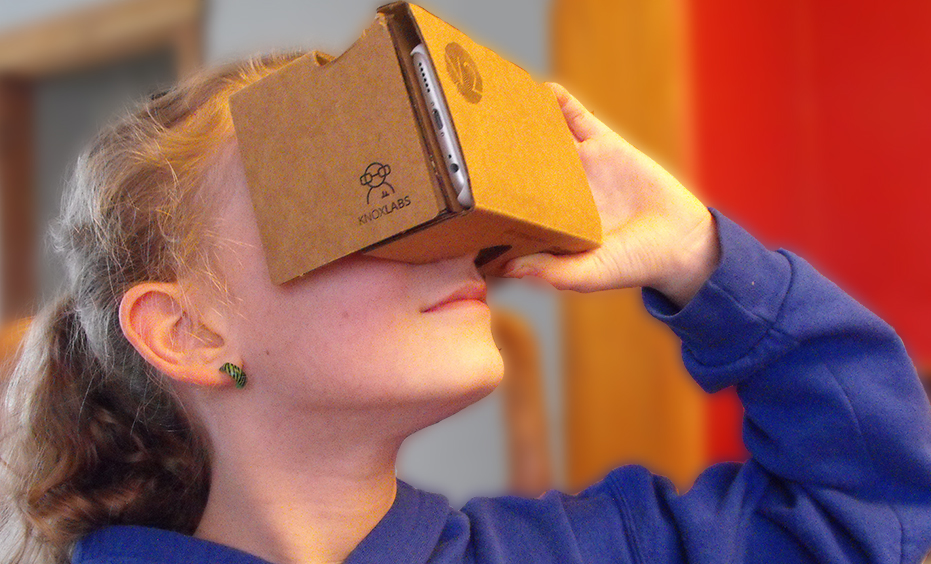
One of the benefits of Nearpod is that unlike other virtual reality tools it is not necessary to use expensive equipment. Nearpod is compatible with inexpensive viewers like Google Cardboard and can also be used on regular tablets and Chromebooks which makes it highly accessible for classrooms around the world regardless of budget constraints.

Supporting Global Collaboration

Nearpod goes beyond just sightseeing, it lays down the groundwork for meaningful cross cultural communication and project based collaboration. Students on opposite sides of the world can take a virtual tour of the same historic place together. After exploring, they can collaborate and ask questions that would be unique to their culture which can help build a greater global understanding. Students can also visit important environmental places that are in danger like the Amazon Rainforest or the melting glaciers in the arctic, then partner with peers in other countries to brainstorm climate action plans. This fosters empathy, critical thinking, and problem solving in the real world. Nearpod can also enable students to explore everyday life in other countries, visiting towns, homes, and schools in different regions. These experiences can become conversation starters in global writing programs or cultural exchanges. 

Nearpod Lesson Plans 

Educators can incorporate Nearpod into their classrooms through lesson plans such as this one. In this lesson students can explore the grand canyon and learn about it through a virtual tour and in an interactive environment. After the virtual tour students can make a poster sharing what they learned from the experience.

Nearpod can be used in many creative ways to help build a deeper understanding of global connections and can create a dialogue between different cultures through its use in the classroom.