![]() |
Returning to the ideas of global collaboration...
![]() |
![]() |
![]() |
Nearpod VR is a game-changer for global learning. It allows students to explore the world without leaving their classroom. From touring the Great Wall of China to diving into the coral reefs of Australia, Nearpod brings immersive 360° experiences directly to students—and that makes it perfect for global collaborations in K–12 education.
Here’s how Nearpod VR enhances global learning and collaboration:
Shared Experiences: Partner classrooms across continents can explore the same virtual destination, sparking meaningful discussions and comparisons.
Co-Creation Projects: Students can co-create presentations, compare cultural experiences, or engage in virtual pen-pal exchanges around VR experiences.
Cultural Empathy: Walking virtually in another community builds empathy and global awareness.
Real-Time Discussion: Use Nearpod's interactive features (polls, open-ended questions, collaboration boards) while exploring a virtual location to foster live global dialogue.
Nearpod VR empowers students to step into each other’s worlds—literally. It’s not just about geography or science, but about connection, curiosity, and building a better, more empathetic generation. When used for global collaboration, VR becomes more than tech—it becomes a bridge.
In today's society, global collaboration is no longer optional, but necessary. Students are growing up in a globally connected society, and equipping them with tools to collaborate, and problem solve with others around the world is essential. One of the tools that help make this possible is virtual reality, and Nearpod stands out as an accessible way to bring immersive, international experiences into classrooms.
Nearpod is an learning platform that allows educators to deliver engaging interactive lessons using assessments, multimedia content, and collaborative tools. Its virtual reality feature lets students take 360 degree virtual field trips to global landmarks, cultural heritage sites, and natural wonders of the world, all from the comfort of the classroom.
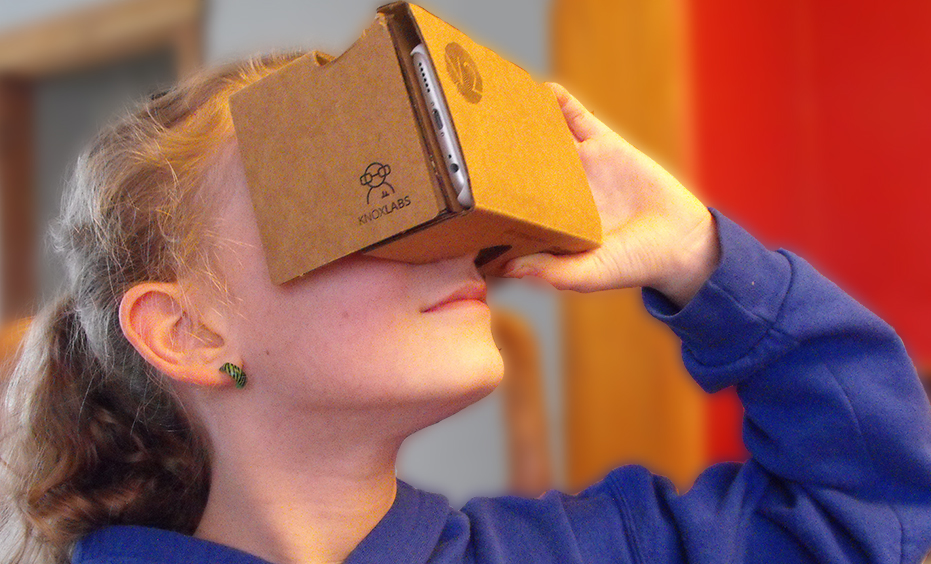
One of the benefits of Nearpod is that unlike other virtual reality tools it is not necessary to use expensive equipment. Nearpod is compatible with inexpensive viewers like Google Cardboard and can also be used on regular tablets and Chromebooks which makes it highly accessible for classrooms around the world regardless of budget constraints.Nearpod goes beyond just sightseeing, it lays down the groundwork for meaningful cross cultural communication and project based collaboration. Students on opposite sides of the world can take a virtual tour of the same historic place together. After exploring, they can collaborate and ask questions that would be unique to their culture which can help build a greater global understanding. Students can also visit important environmental places that are in danger like the Amazon Rainforest or the melting glaciers in the arctic, then partner with peers in other countries to brainstorm climate action plans. This fosters empathy, critical thinking, and problem solving in the real world. Nearpod can also enable students to explore everyday life in other countries, visiting towns, homes, and schools in different regions. These experiences can become conversation starters in global writing programs or cultural exchanges.
Educators can incorporate Nearpod into their classrooms through lesson plans such as this one. In this lesson students can explore the grand canyon and learn about it through a virtual tour and in an interactive environment. After the virtual tour students can make a poster sharing what they learned from the experience.
Nearpod can be used in many creative ways to help build a deeper understanding of global connections and can create a dialogue between different cultures through its use in the classroom.
Augmented and Virtual Reality in the Classroom
Exploring with Nearpod VR
Technology is expanding and transforming education every day, and two tools leading the charge are Augmented Reality and Virtual Reality. These amazing technologies bring education to life by allowing students to interact with content in a way that is hands-on, engaging, and highly visible.
- Virtual Reality: transports students into different virtual environments without even having to leave the classroom.
- Augmented Reality: gives digital content onto the real world just through a simple screen.
Why use this tool in the classroom? Virtual Reality makes learning fun and active instead of boring and passive. It emphasizes on student engagement, support diverse learning styles, and brings content to life. The biggest reason to use this tool is how VR can spark global collaboration. When students from all over the world explore the same virtual reality content and share ideas, student begin to see the world and each other much differently.
https://nearpod.com/t/nearpod-vr-F146040 offers hands-on, 360-degree field trips paired with interactive learning lessons. An example from this site is the virtual field trip to “the Great Barrier Reef.” Students get to explore something from Australia without leaving the classroom. They learn all about the coral reef ecosystems and biodiversity through 360-degree visuals. Teachers can pair this fun activity with collaborative assignments through google slides and more to push the learning process.
The idea of children being in New Jersey and students in Australia working together to create conversations on one of the biggest marine life areas is quite amazing.
Rachel Baumgart
4/16/25
In today's interconnected world, fostering global awareness and collaboration among students is more crucial than ever. Virtual reality (VR) tools like Nearpod offer innovative ways to bring diverse cultures and perspectives into the classroom, enabling students to engage with peers worldwide in meaningful ways.
Nearpod's VR feature provides immersive experiences that transport students to various parts of the world without leaving their classrooms. With over 300,000 virtual reality experiences available, educators can select from a vast library of standards-aligned VR lessons across different subjects .
For instance, students can virtually visit the Eiffel Tower to explore geometric shapes in architecture or journey through the Galapagos Islands to study evolution . These experiences not only enhance understanding of academic concepts but also expose students to different cultures and environments.
Nearpod's interactive features, such as the Collaborate Board, allow students from different parts of the world to work together in real-time. By sharing ideas and perspectives on shared virtual experiences, students develop critical thinking and communication skills essential for global citizenship .
For example, after a virtual tour of the Great Wall of China, students from different countries can discuss the historical significance and cultural impact of the monument, fostering a deeper appreciation for global history .
Objective: To promote cultural understanding and global collaboration among students.
Materials:
Nearpod VR-enabled devices
Internet access
Collaborate Board feature
Procedure:
Introduction: Begin with a discussion on cultural diversity and the importance of global awareness.
VR Experience: Use Nearpod to take students on a virtual tour of a significant cultural site (e.g., the Eiffel Tower).
Collaborative Discussion: Utilize the Collaborate Board to have students share their observations and insights with peers from another country.
Reflection: Encourage students to reflect on what they learned about the culture and how it compares to their own.
Assessment: Evaluate students based on their participation in discussions and their reflective responses.
Integrating Nearpod's VR tools into the classroom opens up endless possibilities for global collaboration. By immersing students in diverse cultures and facilitating real-time interactions with peers worldwide, educators can cultivate a generation of globally-minded individuals prepared to thrive in an interconnected world.
Image:
Video: 360° Global Learning and Virtual Study Abroad
References:
Virtual Reality (VR) and Augmented Reality (AR) have transformed modern education by making learning more interactive, immersive, and engaging. These technologies allow students to experience content rather than just read or hear about it, which can significantly enhance understanding and memory retention. For example, instead of looking at pictures of ancient ruins, students can take virtual field trips and explore them in 3D, gaining a deeper appreciation for history and culture. This hands-on experience helps to bridge the gap between theoretical knowledge and real-world application.

Nearpod is an educational platform that effectively integrates VR and AR into the classroom, making these tools accessible to teachers and students without requiring expensive equipment. Through Nearpod’s VR field trips, students can "visit" places around the world, explore the human body, or dive into outer space using just a tablet or phone. The AR experiences bring 3D objects, like planets, fossils, or organs, into the students’ space, allowing them to examine and interact with them as if they were physically present. These experiences support different learning styles and make abstract or complex topics more tangible and easier to grasp.

Using Nearpod’s VR and AR features also increases student engagement and motivation. Learners are more likely to participate and stay focused when they are excited about the material and how it's being presented. Teachers can guide the experience with real-time questions, polls, and quizzes, making it easy to check for understanding and adapt instruction on the spot. By combining innovative technology with interactive teaching strategies, Nearpod empowers educators to create meaningful, student-centered learning experiences that are both fun and effective.
The WE Virtual Learning Center is a free, online resource hub designed to support educators and students in fostering service-learning, well-being, and trauma-informed practices. Developed by WE Schools, it offers a wide array of tools including lesson plans, professional development modules, and student activities focused on building empathy, resilience, and global citizenship. Educators can access themed workshops, on-demand video libraries, and resources aligned with social and emotional learning to create inclusive and engaging classrooms. The platform also provides opportunities for students to explore local and global issues, encouraging them to take meaningful action in their communities. Registration is free and open to all educators seeking to enhance their teaching practices and empower their students
Today I Looked into the WE learning center, and I can say that the most interesting one I found was, Restorative Justice Module.
Getting rid of toxic educational traditions is so important. The better way for a student to like school, is for them to have a good relationship with their classmates, school, and educator.
Being a future educator I am open to all tips and tricks. This course alone has given me so many outlets and options that I am inclined to use in my class as a new teacher. Navigating around WE Virtual Learning Center has made me excited for future use.
I located the Virtual Learning Center on the website which provides so many cool courses and organizational tools for teacher use. They provide calendars to help plan our days and lesson plans as well as courses to help teachers navigate student engagement and empowerment.
They also provide downloadable resources for teachers as walk through, step-by-step instructional lessons. I like the We Have Gratitude lesson and could definitely see my self using this in my class. This downloadable resource provides the purpose and objective of the lesson. It provides the skills that will be used, the time that will be consumed and the materials that are needed. Not only do these lesson plans lay things out for us, they are fun and interactive. Even the modules are colorful and intriguing. Here is a screenshot of part of an activity given in the We Have Gratitude downloadable content, which walks the teacher and the students through the lesson plans.Each resource is also provided with a course that shares videos, questions, and quizzes to help you really understand the meaning and course content. I decided to take the course on Say it Now: Why Gratitude is a Key Ingredient for Well-being and Promoting SEL and was introduced to the Say it Now workshop video. After watching the video, they provide seven questions reflecting back on what was discussed.If a question is answered incorrectly, they provide learners the opportunity to try again. Once the question is answered correctly, the course explains why it is correct. After completing the course, you can continue to read the resource page and begin to implement this in your life and classroom!
I recently explored the WE Virtual Learning Center and the resources it can provide for my future classroom. This site is a great resource and provides lots of tools for educators and students to get involved in their communities and affect change. In an ever growing interconnected world, it is increasingly important for students to learn about and understand the global community they are apart of, and this site is a great way to incorporate this in your classroom. There are Service Learning Toolkit which include a range of topics that students can get involved in to advocate for change.
My favorite tool I found was the D.I.Y. Campaign found under the Action Campaigns tab. Unlike the other action campaigns on the website, this one is not specific to one cause. It provides an outline and ideas for how students/classrooms can get involved and advocate for a cause they choose. I especially like this one because it can so easily be tailored to students interests. Instead of choosing from a list of predetermined topics, students can come up with their own ideas of what they want to work towards. Then students can work on their own or in small groups towards their goal, or the whole class can vote on the topics they came up with and work towards the winner as a class.
All throughout the semester, it has been a great learning opportunity to understand and engage with online web tools. As we come to a close for this semester, I explore one last reflection, and ultimately provide my audience with tools I will be using in my future classroom.
WE Virtual Learning Center, is a website dedicated to providing resources for not only students, but educators as well. Throughout my discovery of this website, I found something called We Virtual
When explaining major subjects, these videos/virtual workshops will come in handy within the classroom. They are fun, interactive, and engaging all at once, which will be perfect to incorporate into lessons. Overall, I love this website, and I will be exploring it further and using other tools provided as well.In our rapidly evolving educational landscape, it's essential to equip both educators and students with tools that foster active citizenship, social-emotional learning, and community engagement. The WE Virtual Learning Center (VLC) stands out as a comprehensive platform dedicated to these objectives.
The WE Virtual Learning Center is a free, online resource library designed to support educators in implementing service-learning, trauma-informed practices, and promoting student well-being. It offers a variety of materials, including curriculum guides, lesson plans, professional development tools, and access to virtual events. These resources aim to empower teachers to foster active, engaged citizenship among students.
Enhance your teaching strategies with resources focused on trauma-informed practices, professional development, and training. Connect with a community of like-minded educators to share experiences and insights.
The WE Virtual Learning Center exemplifies a commitment to nurturing the next generation of changemakers. By providing educators with the resources and support they need, the VLC plays a pivotal role in shaping students who are not only academically proficient but also socially conscious and engaged. Explore the WE Virtual Learning Center today and join a global community dedicated to making a difference.
In the WE Virtual Learning Center, I explored under the tab "We Teaching Courses" and looked at "Bringing Gratitude to Life Within Your Classroom and School Community". I picked this tab because not only do I believe that school is used to give kids an education from a knowledge standpoint, I believe it's also important to teach children about life. Teaching children to be grateful and and express gratitude teaches them how to be kinder people. It's important for all educators to know that they're not just raising students, they're raising people.
Gratitude can be taught in a classroom in many different ways. Some ways involve a trivia game where students are asked a multitude of questions about gratitude and how expressing gratitude makes them feel. Another example is to be mindful and have the students reflect upon their week and express what they're grateful for throughout their week. This keeps students grounded, having them express that life is a gift and simply being able to have an education is something to be grateful for. One final example is sharing our feelings on gratitude and what we're grateful for to others. This keeps student connected with their feelings but also creates active listening to their classmates and a way for students to build connections with one another.
Following the conclusion of this semester, the Spring 2025 semester, I will officially be closer to entering the classroom as an educator than I was leaving the classroom the last time as a student(K-12). With that in mind, it is important to begin formulating how exactly one will go about leading their classroom! Those formulations should be things that future educators are excited about, things that will immediately bring value to the classroom.
The WE Schools Service Learning toolkit is a guided roadmap that assists in examining social issues, creating action plans, and implementing effective projects within the community. With a service learning emphasis, it aligns classroom education with practical application, providing real world experiences that coincide with classroom learning. Students are encouraged to ask hard questions, set targets, and work collaboratively.
The toolkit reflects a range of flexible campaign choices, including initiatives around sustainability, equity, and wellness, or the D.I.Y. campaign resource. The adaptable nature allows learners to link what they learn to those issues that are most meaningful to them. Moreover, the toolkit focuses strongly on reflection at all steps, with opportunities for students to record progress, to critically reflect upon experience, and to acknowledge and enjoy both academic and personal growth.
In my future classroom, this toolkit will be great for project based learning. I will encourage my students to become active citizens through activities like a food drive at school, an awareness campaign on social media, or an environmental project for the community. We will use the worksheets to facilitate discussion, make decisions, and analyze results.
Changemakers: Service learning.
What is service learning?
Service learning is more than volunteering or doing community service. It allows students take what they learn in the classroom and apply it to real world scenarios to help your community and people around you solve problems. This can help students with their social skills when interacting with other people, increase academic engagement and, university and college readiness.
Service Learning Steps
Service learning has a framework of 4 steps to help students meet academic learning objectives while learning about local, national and global issues and having a positive impact.
Step 1 is Investigate and Learn. Students will investigate any issue or challenge that is being faced by people in their community. For example garbage or waste on local parks, teaching people about the importance of recycling, etc.
Step 2 is Action Plan. Develop a plan to take action on this matter. For example, bringing awareness about waste and trash in local parks can have a positive impact on them.
Step 3 is Take Action. Based on your plan, take action and do something to better the situation. Volunteering to clean public places, or placing signs about recycling near recycling cans can encourage more people to dispose their trash in the right place.
Step 4 is Report and Celebrate. Any action you take, as small as it might have been, will have a bigger impact in your community than you think. Keep track of everything you do.
Finally Record and Reflect. Keep an activity log and complete written reflections throughout your campaign.